 blog
7 Signs Your Tree Needs Professional Pruning
Table of Contents
- Dead or Dying Branches: The Most Obvious Sign
- Branches Encroaching on Power Lines or Structures
- Crossing or Rubbing Limbs and Poor Growth Patterns
- Dense Canopy, Disease, and Fungal Growth
- Storm Damage and Structural Integrity Concerns
- When to Prune Trees: Seasonal Timing and Dormancy
- Tree Health Assessment: Visual ID of Stress and Decay
- Cost of Professional Tree Pruning and DIY vs. Pro Threshold
- Frequently Asked Questions
Last Updated: September 25, 2026
Dead or Dying Branches: The Most Obvious Sign
Dead branches are the clearest signal that a tree needs professional pruning. A dead limb has no leaves in growing season, snaps easily, and poses a falling hazard over driveways, roofs, and walkways.
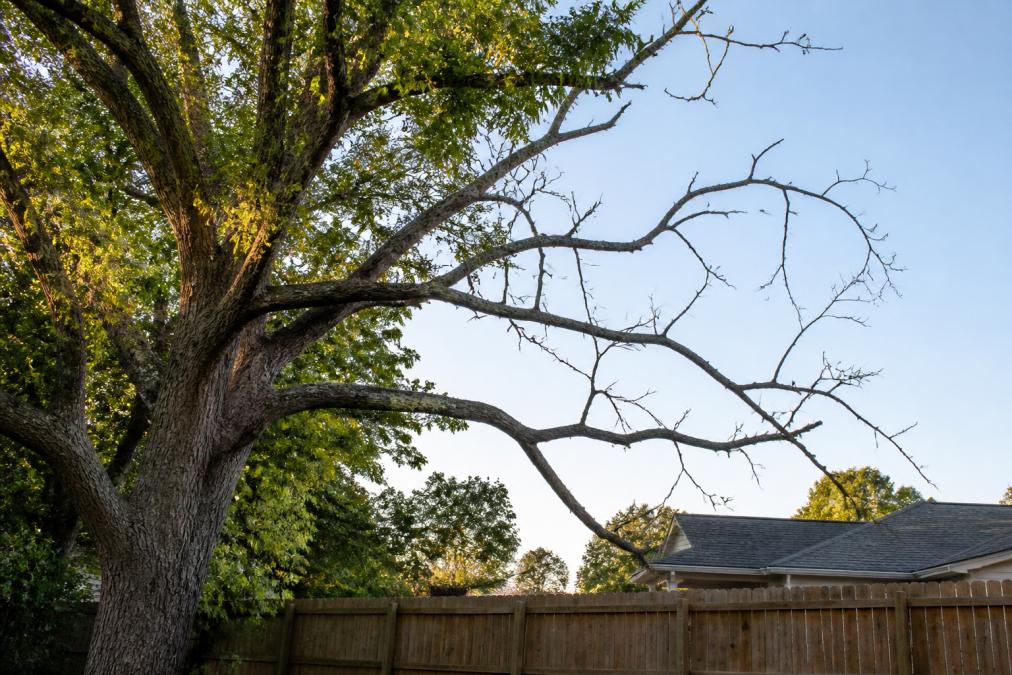
Here's how to spot deadwood:
- No leaves while the rest of the tree is green
- Bark peeling away or missing
- Branches that snap instead of bending
- A dull, gray tone instead of healthy brown
Branches Encroaching on Power Lines or Structures
A branch within 10 feet of a power line is a hazard, not a landscaping issue. Utility companies handle clearance near lines, but the tree itself still needs care.
Watch for limbs that:
- Touch or approach electrical wires
- Overhang your roof, gutters, or chimney
- Block windows or scrape siding
- Grow into fences or sheds
Crossing or Rubbing Limbs and Poor Growth Patterns
Two branches rubbing together create an open wound that never heals. Every time the wind blows, they scrape again. That damage invites decay.
Look for these structural problems:
- Limbs crossing in an X shape
- Branches rubbing bark off each other
- Codominant stems growing at sharp angles
- One side of the tree heavier than the other
Dense Canopy, Disease, and Fungal Growth
A canopy so thick that no light passes through is a red flag. Dense growth traps moisture and blocks airflow, which invites fungus and disease.
Signs your canopy needs crown thinning:
- Sunlight can't reach the ground
- Interior branches are bare and dying
- Mushrooms or fungal fruiting bodies on the trunk
- Black or brown spots on leaves
- Cankers, which are sunken dead patches on bark
Storm Damage and Structural Integrity Concerns
After a storm, most homeowners focus on the obvious damage. The real danger is what you can't see.
Watch for:
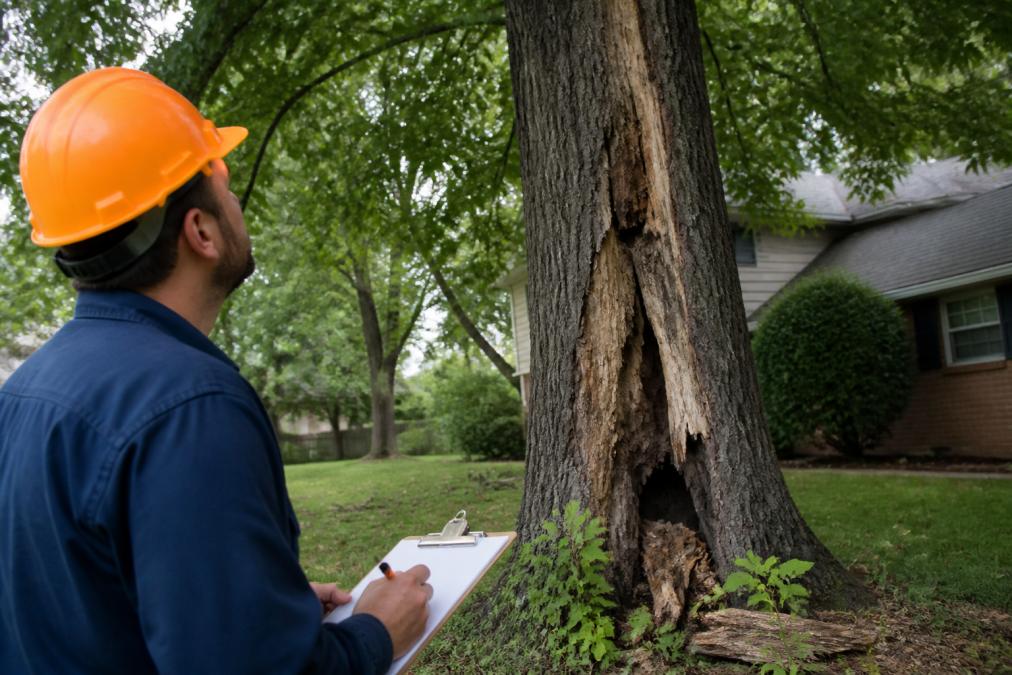
- Cracked or split trunks
- Leaning trees that were straight before
- Hanging branches caught in the canopy
- Exposed roots or lifted soil at the base
- Brittle wood that snaps under light pressure
When to Prune Trees: Seasonal Timing and Dormancy
Most 'signs you need pruning' articles treat timing as an afterthought. It isn't. Pruning at the wrong time of year can kill a tree that would have thrived with the same cut made eight weeks earlier. The mechanism is wound compartmentalization, the tree's process of sealing a cut with callus tissue and chemical boundaries. That process runs at different speeds depending on species, season, and the tree's stored energy reserves.
The General Rule: Dormancy
Late winter, just before bud break, is the safest window for most deciduous trees. The tree is dormant, stored carbohydrates are at their seasonal peak, and the fungal and insect vectors that colonize fresh wounds are largely inactive. Cuts made now seal fastest in spring.
Species-Specific Timing (The Part Competitors Skip)
| Tree Group | Best Window | Why |
|---|---|---|
| Oaks (in oak-wilt regions) | Late winter, dry cold | Oak wilt beetles and spores are inactive; spring and summer cuts attract them |
| Maples, birches, walnuts, elms | Early summer, after leaf-out | These are 'bleeders', late-winter cuts weep sap heavily and weaken the tree |
| Flowering trees (dogwood, crabapple, cherry) | Immediately after bloom | Pruning before bloom removes the flower buds you're growing the tree for |
| Stone fruits (peach, plum, apricot) | Early spring, after frost risk | Fall and winter cuts invite canker diseases like cytospora |
| Evergreens (pine, spruce, fir) | Late spring, after new growth hardens | Pines pruned in dormancy bleed resin and grow distorted |
| Magnolias, dogwoods | After bloom, light only | These seal wounds slowly; heavy cuts invite decay |
Why Fall Is the Worst Window for Most Species
Fall pruning creates an open wound right as fungal spores are dispersing and the tree is shutting down for winter. Callus tissue won't form until spring, so the wound sits exposed for months. The exception is removing dead, diseased, or storm-damaged wood, that can come off any time of year because it's already a hazard.
The Branch Collar Rule
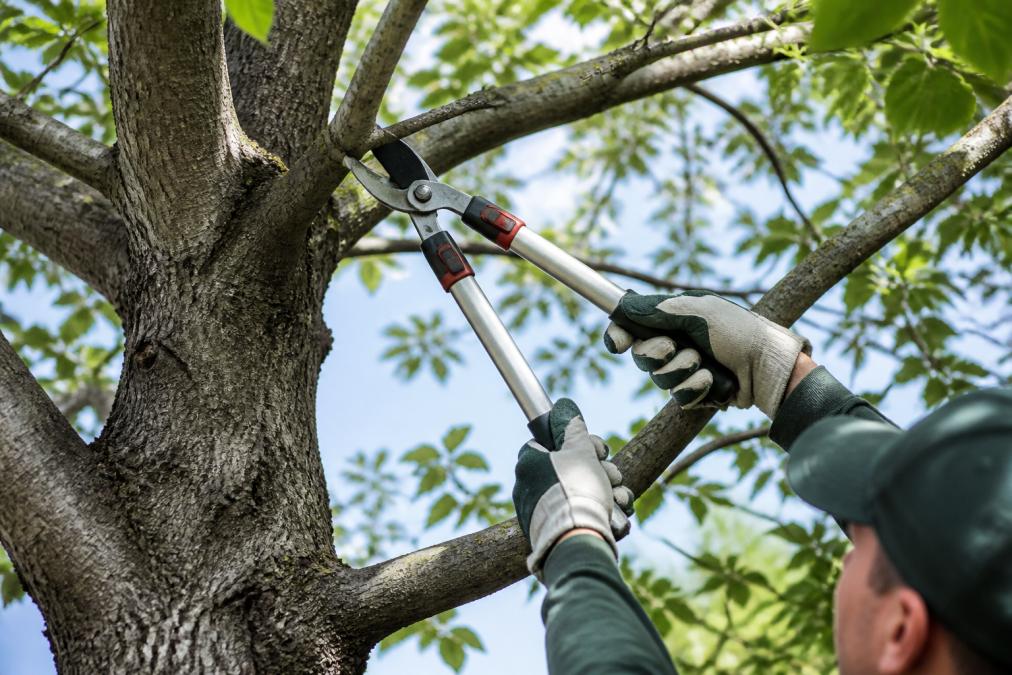
A proper cut leaves the branch collar, the raised ring of tissue where the branch meets the trunk, intact. The collar is where the tree's compartmentalization chemistry lives. Cutting flush against the trunk destroys it and leaves a wound the tree cannot seal. Cutting too far out leaves a stub that dies back and rots into the trunk. The correct cut is just outside the collar, angled so water runs off.
When 'Wrong Time' Beats 'No Action'
A dead, cracked, or storm-damaged limb is a hazard regardless of the calendar. Safety pruning overrides seasonal timing. If a limb is hanging over a walkway or resting on a roof, remove it now and schedule the structural work for the correct window.
Tree Health Assessment: Visual ID of Stress and Decay
A tree health assessment is a close inspection of a tree's structure, canopy, and root zone to spot problems before they become hazards. It looks at what's visible and what the tree is telling you.
Visual signs of stress include:
- Dieback at the tips of branches
- Foliage discoloration, yellow or brown leaves in season
- Thinning canopy density compared to nearby trees
- Cracks or seams in the trunk
- Soft or spongy wood
- Mushrooms at the base
Cost of Professional Tree Pruning and DIY vs. Pro Threshold
Here's the actual line between what a homeowner can safely handle and what requires a certified arborist with rigging, insurance, and training.
The DIY Zone: What You Can Actually Prune
Homeowners can safely handle small, reachable work when all of the following are true:
- The branch is under 2 inches in diameter
- Both feet stay on the ground or on a stable stepladder on level surface
- The branch is not within 10 feet of any electrical line, service drop, or meter
- The tree shows no cracks, cavities, fungal conks, or lean
- You can see the branch collar (the raised ring where branch meets trunk) and reach it with a bypass pruner or pruning saw
The Pro Zone: Where DIY Becomes a Liability
Hand the job to a certified arborist when any of these apply:
- Height. Anything requiring a ladder above 10 feet, or any work where you'd need to leave the ladder to reach the limb. Falls from ladders are one of the leading causes of serious DIY tree-work injuries.
- Power lines. The Occupational Safety and Health Administration (OSHA) requires a minimum 10-foot clearance for unqualified workers near energized lines, and utility line clearance is a specialized trade. Never prune near a service drop, call the utility first.
- Decay or structural defect. Cavities, conks, seams, or a hollow sound when tapped mean the tree's load-bearing wood is compromised. A limb that looks small can be attached to wood that fails without warning.
- Large limbs over targets. Anything over 2 inches, or any limb hanging over a roof, driveway, fence, or walkway, requires controlled rigging, ropes, friction devices, and a ground person, to lower it without property damage.
- Climbing required. Spurs, saddles, and aerial work are not homeowner skills. A chainsaw operated one-handed at height is how amputations happen.
- Species-specific risk. Oaks in oak-wilt regions, elms with Dutch elm disease pressure, and any tree with visible cankers should be evaluated before cutting.
What a Written Estimate Should Include
Pricing varies by tree size, species, access, and complexity. A phone quote without a site visit is a red flag. Ask for a written estimate that spells out:
- Scope of work (which limbs, which trees, what's left)
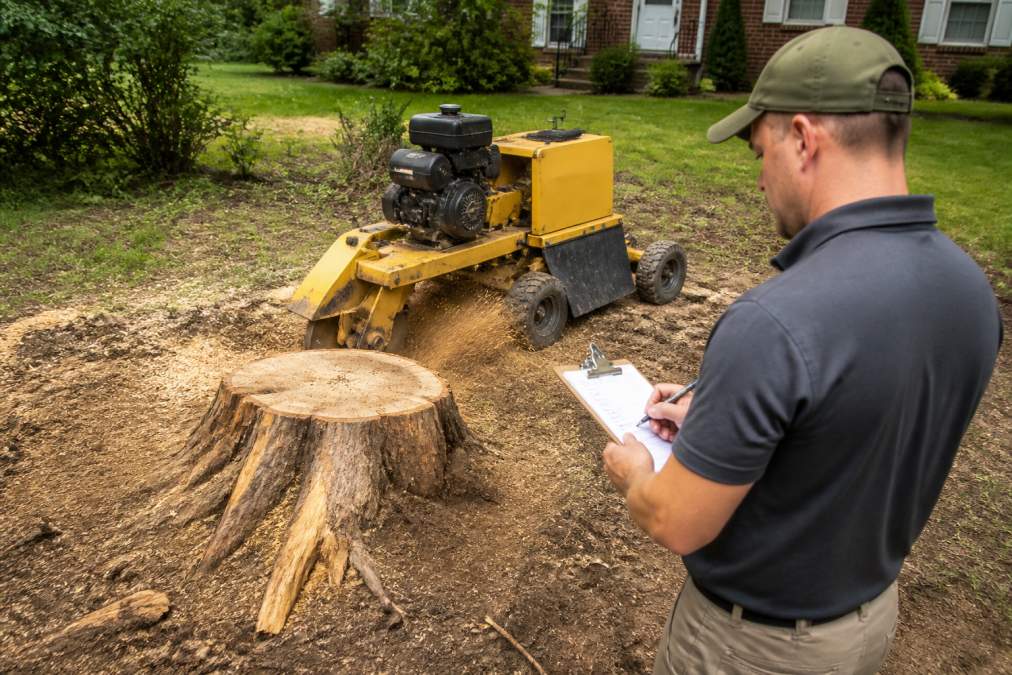
- Whether stump grinding is included or billed separately
- Cleanup, chipping, and haul-away
- Proof of general liability insurance and workers' compensation
- ISA Certified Arborist credential number, if claimed
The Cheapest Bid Trap
Never prune within 10 feet of an energized line, and never use a chainsaw on a ladder. Both are common causes of fatal incidents that a certified arborist would have avoided with proper rigging and line-clearance procedures.
For an accurate quote on your property, the International Society of Arboriculture's find-an-arborist tool helps you locate certified professionals in your area.
Frequently Asked Questions
What are the common mistakes to avoid when pruning a tree?
The biggest mistakes are cutting too close to the trunk, leaving stubs, and removing more than 25 percent of the canopy in one session. Topping, which cuts main branches back to stubs, triggers weak vegetative growth and invites decay. Always cut just outside the branch collar, the swollen area where the branch meets the trunk, so callus tissue can seal the pruning wound properly. Avoid pruning during active spring growth or right after a storm when the tree is already stressed.
How do I know if a tree is dying or just needs pruning?
Look for dieback, foliage discoloration, fungal fruiting bodies, and brittle wood. A tree with deadwood scattered through the canopy but healthy new lateral growth may just need crown thinning. If you see canker, codominant stems with included bark, or a leaning trunk with exposed root flare, the tree may be declining beyond what pruning can fix. A certified arborist can perform a tree health assessment to tell the difference and recommend whether structural pruning or removal is safer.
What is the 1-2-3 rule for pruning trees?
The 1-2-3 rule is a guideline for removing branches: cut one-third of the branch from the underside, one-third from the top slightly further out, and the final third from the top at the branch collar. This three-cut method prevents bark tearing when heavy limbs fall. It applies to any branch too large to support by hand and is standard practice for arborists doing structural pruning on mature trees.
What months should you not prune trees?
Avoid heavy pruning in early spring when trees are pushing new growth, and skip the hottest summer weeks when heat stress is high. For most species, late winter dormancy is ideal. Do not prune oaks in spring or early summer in areas where oak wilt is active, and avoid pruning any tree immediately after storm damage unless you are removing an immediate hazard. A seasonal pruning calendar keeps trees healthier than random trimming.