 blog
Stump Removal Service Cost: Stump Grinding vs Removal
Table of Contents
- What Stump Removal Service Cost Actually Covers
- Stump Grinding vs Removal Cost: Which One Fits Your Yard
- Average Cost to Grind a Tree Stump: What Moves the Number
- Factors Affecting Stump Removal Price
- DIY vs Hiring a Professional: Safety, Tools, and Realistic Limits
- What Happens After the Stump Is Gone
- Insurance, Liability, and Protecting Your Property Value
- Frequently Asked Questions
Last Updated: September 23, 2026
What Stump Removal Service Cost Actually Covers
Stump removal service cost is the total price a tree care company charges to eliminate a stump from your property, and it typically includes labor, equipment use, debris handling, and site cleanup.
Most quotes cover four things:
- Labor for the crew running the equipment
- Machinery such as a stump cutter or mini excavator
- Disposal or repurposing of grindings and wood chips
- Site cleanup once the stump is gone
What usually sits outside the quote? Replanting, topsoil delivery, and any landscaping you want after the hole is filled. Those are separate jobs, and good providers say so upfront.
Stump Grinding vs Removal Cost: Which One Fits Your Yard
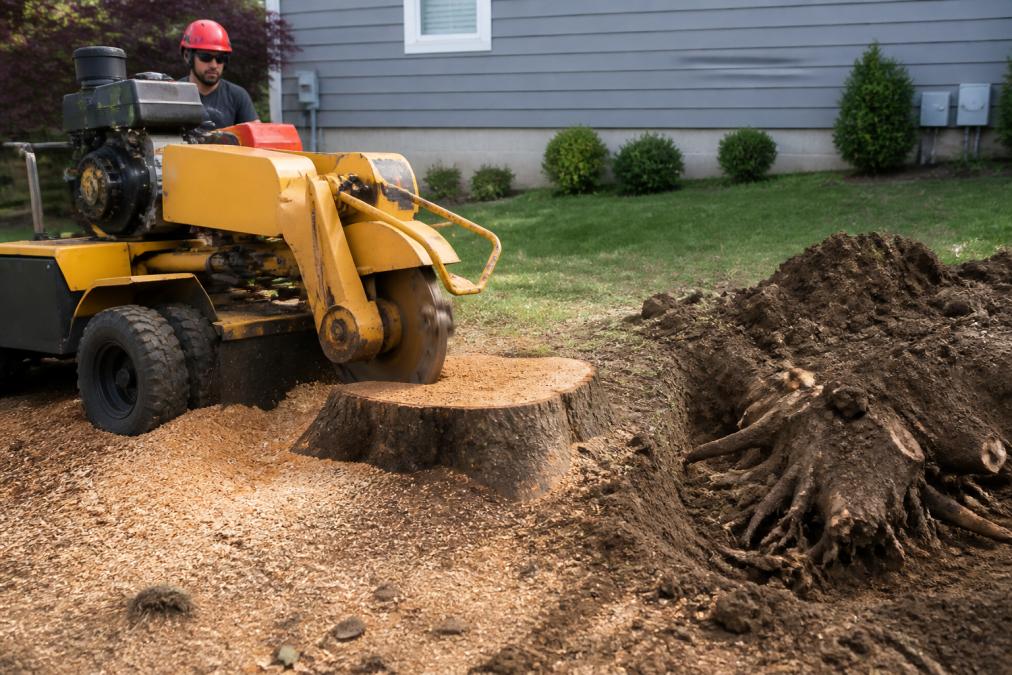
Stump grinding costs less than full removal because the machine only chews the stump down below grade, leaving the root ball in the ground. Full removal pulls the entire root system out, which takes heavier equipment, more labor, and more time.
When grinding is the practical choice
Grinding works best when the stump sits away from foundations, driveways, and utility lines. It's also the right call if you plan to lay sod or build a garden bed over the spot. Most stumps fall into this category.
When full removal is worth the extra work
Choose full removal when you're replanting in the same spot, when the stump sits near a structure, or when surface roots keep heaving your patio. Excavation removes the root ball entirely, so nothing regrows and nothing shifts underground.
Average Cost to Grind a Tree Stump: What Moves the Number
The average cost to grind a tree stump depends on three variables: stump diameter, grinding depth, and how easily equipment reaches the stump. A wide stump in an open yard costs far less than a narrow one wedged behind a fence.
How per-inch pricing works
The diameter and depth of the stump are key factors. A wider stump or one requiring deeper grinding will typically require more labor and time.
Minimum service fees
Many tree service providers have a minimum service fee to cover mobilization costs. Bundling stump grinding with other tree work can be a way to manage costs.
How to get a usable ballpark before anyone shows up
Measure the base diameter of the stump in inches, then note whether a machine can roll within a few feet of it. Those two details let any provider give you a realistic estimate over the phone.
| Factor | Low Effort | High Effort |
|---|---|---|
| Stump diameter | Under 12 inches | Over 30 inches |
| Site access | Open lawn, wide gate | Fenced yard, slope |
| Grinding depth | 4-6 inches below grade | 12+ inches, root flare |
| Root system | Single taproot | Surface roots spreading wide |
| Debris handling | Chips left on site | Chips hauled away |
What the quote should itemize
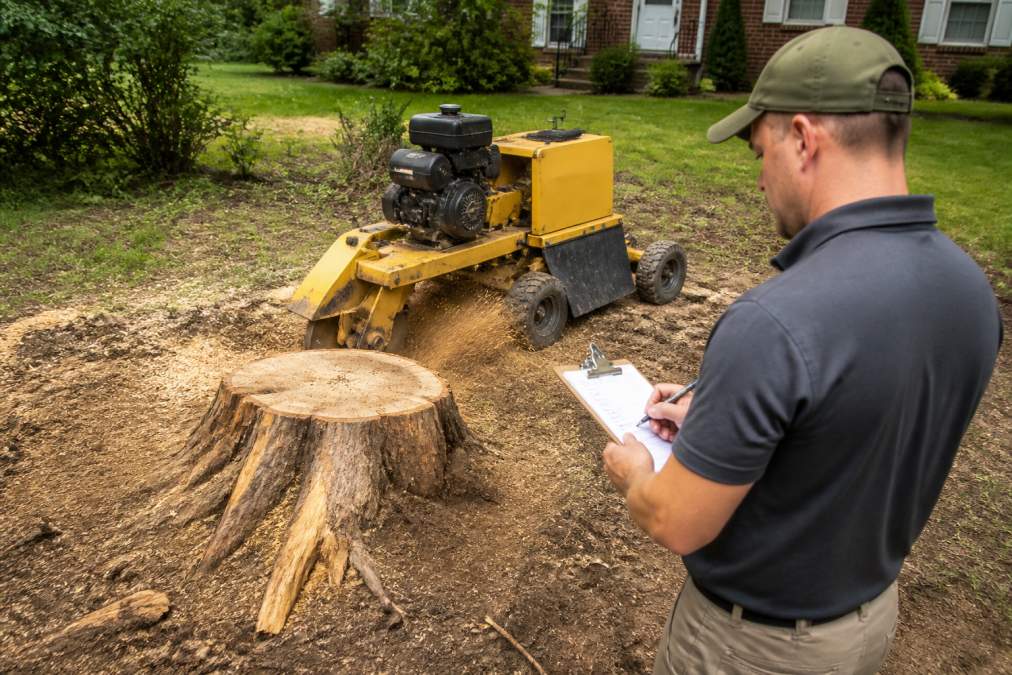
Ask the provider to break the number into mobilization, grinding, and debris handling. That breakdown is what lets you compare two quotes fairly, because a low grinding line paired with a separate haul-away charge can end up costing more than a single all-in price. Confirm in writing whether the chips stay or go, and whether the hole gets backfilled.
Factors Affecting Stump Removal Price
Several factors affecting stump removal price go beyond the stump itself. Site accessibility, machinery size, root complexity, and soil conditions all shift the final number, sometimes by a wide margin.
Site access, machinery, and why tight yards cost more
A stump cutter needs roughly three feet of clearance to work safely. When a gate is too narrow or a fence blocks the path, crews switch to smaller equipment or hand work, which takes longer. Tight access also raises the risk of damage to landscaping, so providers price that risk in.
Root system complexity and soil conditions
Species matters here. Some trees send roots straight down; others spread shallow roots across a wide area. Rocky or compacted soil slows grinding and dulls cutters, adding labor time. Sandy loam cuts faster.
DIY vs Hiring a Professional: Safety, Tools, and Realistic Limits
Hiring a professional is the safer choice for any stump wider than about 12 inches. Renting a stump cutter costs money, requires physical control of a heavy machine, and demands safety gear most homeowners don't own.
What the rental actually involves
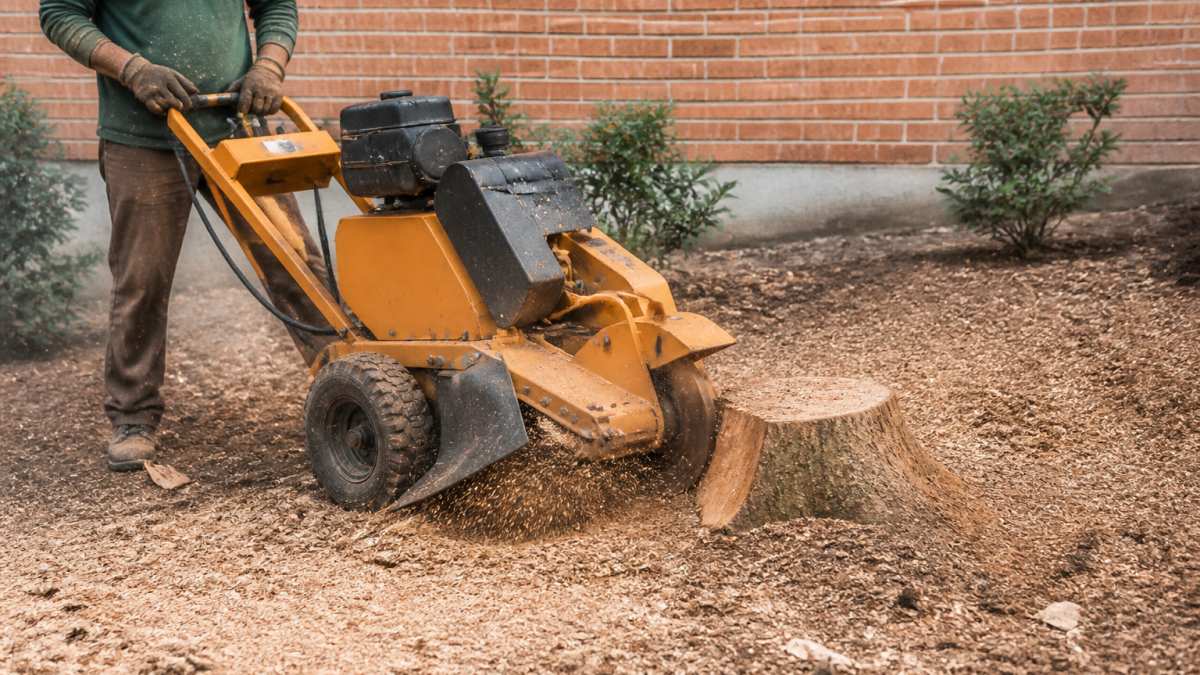
A walk-behind stump grinder is a heavy, self-propelled machine with a spinning carbide cutter wheel. Rental yards typically charge by the day or by a half-day, plus a damage waiver, fuel, and a deposit. The machine must be transported on a trailer, which means you need a vehicle rated to tow it. Once on site, the cutter throws chips and small debris at high speed, so eye and ear protection, gloves, and closed-toe boots are the minimum.
- Rental grinder: heavy, kickback-prone, needs training and a tow vehicle
- Chemicals: slow, and some products carry handling risks
- Burning: restricted or banned in many areas
- Hand digging: realistic only for small stumps
The safety angle most guides skip
A stump cutter can strike buried objects, irrigation lines, landscape lighting wire, gas or water service, and a thrown cutter tooth or rock can injure anyone standing nearby. Professional crews carry insurance that covers property damage and injury on the job; a homeowner renting a machine absorbs that risk personally. That gap is the real reason the professional-versus-DIY decision is not purely about the rental fee.
When DIY still makes sense
If the stump is small, soft-wooded, and sitting in open ground with no buried utilities nearby, hand removal is a reasonable weekend project. Call 811 before you dig anywhere near a stump, regardless of which method you choose. For anything larger, the math favors hiring out.
What Happens After the Stump Is Gone
Post-removal landscaping is where most guides stop, and it's exactly where homeowners get stuck. The hole left by grinding fills with chips and soil, which settle over time. You'll need to top it off and tamp it down before planting.
Wood chips, mulch, and the environmental trade-off
Grindings make excellent mulch for garden beds, and many crews leave them on site if you ask. Left in the hole, though, they decompose and sink, creating a depression months later. Wood chips also tie up nitrogen as they break down, so mix them into beds rather than planting directly into pure chip fill.
For full removal, the excavated soil and root ball get hauled away. That debris removal is part of the service, and it's worth confirming in writing.
Insurance, Liability, and Protecting Your Property Value
Insurance and liability matter more than most homeowners realize. A tree crew working over your house, driveway, or power lines carries real risk, and you want that risk covered by the provider, not your homeowner's policy.
Ask two questions before anyone starts:
- Are you insured and can I see the certificate?
- Who pays if my fence or driveway is damaged?
Frequently Asked Questions
Is it cheaper to grind a stump or remove it entirely?
Grinding is almost always the lower-cost option because it leaves the root ball in the ground and requires less excavation, labor, and heavy equipment. Full removal means digging out the entire stump and root ball, which takes longer and usually includes backfilling the hole. If you plan to replant in the same spot, build a structure, or the roots are damaging a foundation or driveway, the higher cost of full removal is worth it. For most homeowners who just want a flat, safe yard, grinding delivers the result at a lower total.
Does stump removal service cost include debris cleanup and root removal?
It depends on what you agree to before work starts. Some providers grind the stump and leave the wood chips on site, while others haul them away for an added fee. Root removal is typically a separate line item, since grinding only addresses the stump above and slightly below grade. Ask specifically: how deep will the grinding go, will chips be removed or left as mulch, and are surface roots included. Getting those three answers in writing prevents surprise charges later.
How does stump diameter affect the final service price?
Diameter is one of the biggest cost drivers. The diameter of the stump, measured across its widest part at ground level, is a significant cost driver. A wider stump generally takes longer to grind, produces more debris, and may require more extensive equipment use. The height of the stump also plays a role, as taller stumps require more initial cutting before grinding can commence. Measure your stump across the base before requesting a quote so you can compare estimates fairly and spot numbers that seem out of line.
Are there extra fees for stumps in hard-to-reach areas?
Yes, and this is one of the most common sources of a higher-than-expected bill. If a grinder cannot fit through a gate, across a slope, or between structures, the crew may need smaller equipment, hand work, or a crane, all of which add labor. Fences, utility lines, sprinkler systems, and buried cables also slow the job and can require protective measures. Mention access limits and anything buried nearby when you request your estimate so the quote reflects the real conditions on your property.